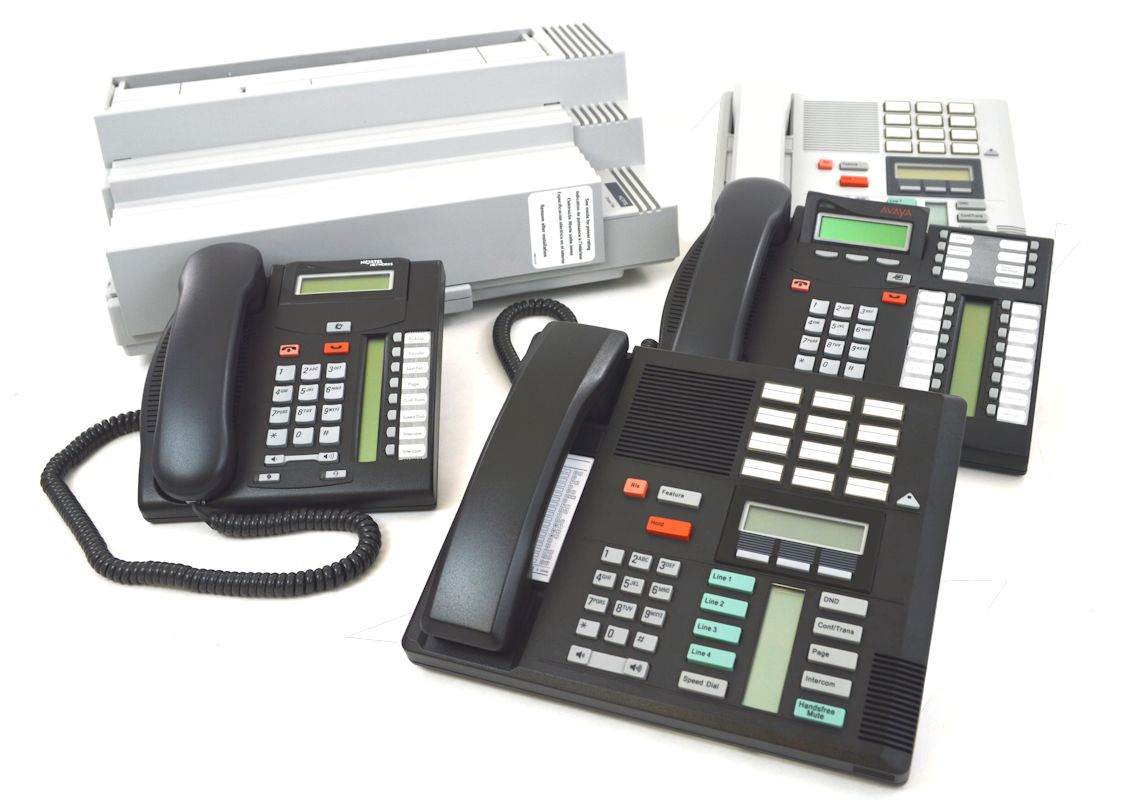
Nortel Norstar is fully discontinued — no manufacturer support has existed since 2015
Nortel filed for bankruptcy in January 2009, and Avaya — which acquired the product line — ended all support for Nortel BCM and Norstar systems by October 2015. There is no manufacturer support, no authorized parts supply chain, and no keycode recovery system. Norstar systems running in 2026 are operating on hardware that is 15 to 30+ years old, with specific known failure modes that can permanently disable the system with no recovery path. If your Norstar is still running, it is running entirely on borrowed time.
Still Running a Nortel Norstar? Here’s Your Clearest Path to a Modern Phone System.
At its peak, the Norstar was the #1 small business phone system in the world — over 800,000 businesses in 80 countries relied on it. Its reputation for reliability was earned: the Norstar CICS and MICS platforms were engineered with a documented mean time between failure (MTBF) of approximately 100 years. That reputation is, frankly, the reason so many are still running in 2026.
But engineering longevity and manufacturer support are two different things. Nortel went bankrupt in 2009. Avaya wound down all support by 2015. There are no replacement parts being manufactured, no keycode recovery system if your unit crashes, and a growing shortage of technicians who know these systems at all. When a Norstar power supply fails, or a trunk card dies, or a power outage wipes the super-capacitor and erases your programming — recovery may not be possible. Phonewire can replace your Norstar with a fully managed modern system, preserve your phone numbers, and have your staff trained before end of day.
What Usually Brings People to This Page
Almost nobody replaces a working Nortel Norstar system on a whim. Three things bring people here: a phone or the KSU died and the used-parts supply finally ran dry; the copper lines feeding it are being retired; or an inspection or insurance review asked what the phone system is. If one of those is you, the answer is the same: keep the phones and wiring that still work, replace what is failing, and do it on a planned date instead of an emergency one.
How many phones are on your Nortel Norstar system? Tell us the count and the building, and we come back with an itemized quote, not a range. Request a quote or call (800) 857-1517 — a real person answers.
Why Norstar Systems Fail — And Why Recovery Is Often Impossible
What Norstar Users Valued — And What Phonewire Delivers
What You Gain That a Norstar Never Had
What Phonewire Recommends as a Norstar Replacement
Phonewire Hybrid System
For businesses that chose Norstar because they wanted reliable on-premises hardware without internet dependency — it is the direct modern successor: hardware at your location, flat licensing, full managed support.
- On-premises appliance — hardware at your location
- $4,999 hardware (one-time) + $999/year license (10 users)
- ~$200/month SIP trunks replacing your POTS lines
- Panasonic phones recommended — most familiar handset transition
- Snom, Yealink, or Poly also available
- Optional cellular failover add-on
- Full on-site installation + same-day staff training
- U.S.-based support answered in under 1 minute
- Day-to-day changes at no additional charge
- Programming backed up digitally — survives power outages
Phonewire Cloud-Hosted
For businesses that have grown since the Norstar was installed — multiple locations, remote staff, or a need to eliminate on-premises hardware entirely — cloud-hosted delivers every feature with zero hardware to maintain.
- $35/user/month — no hardware purchase
- Works across any number of locations
- Same Linkus UC mobile and desktop apps
- Voicemail to email, auto-attendant, call recording
- Microsoft 365 integration
- Same U.S.-based support and change service
Frequently Asked Questions
Can I keep my Norstar M-series or T-series phones?
No. Norstar M-series (M7100, M7208, M7310, M7324) and T-series (T7316, T7316e, T7208) phones use Nortel’s proprietary digital protocol — they are not standard SIP and cannot be used on any modern open-standard phone system. Your Norstar handsets are end-of-life along with the system itself. Phonewire provides new desk phones as part of every installation. Panasonic in particular offers the most intuitive transition for Norstar users — familiar physical call handling that doesn’t require relearning decades of muscle memory.
I don’t have the keycode for my Norstar. Is that a problem?
It is a risk. If your Norstar system crashes and requires the keycode to restart, the original Nortel keycode retrieval system was decommissioned when Nortel went bankrupt. Without the keycode, a crashed system may be permanently unrecoverable. If your system is currently running, this is a good reason to migrate proactively before a failure — rather than wait until an irrecoverable crash makes the decision for you. Phonewire can assess your current system and give you a clear migration recommendation.
Can I keep my existing phone numbers?
Yes. Your business phone numbers port to the Phonewire system from wherever they’re currently hosted — POTS/analog lines, a carrier, or any existing number. Porting typically takes 2–4 weeks. During the transition, your Norstar system remains live and call forwarding keeps all calls connected. There is no gap in service.
Can Phonewire reuse my existing cabling?
Often, yes. Norstar systems used standard 2-wire phone wiring for digital station connections. This same wiring can often be repurposed for new SIP desk phones, significantly reducing installation cost by eliminating new cable runs. A Phonewire engineer assesses your existing wiring during the pre-installation site survey and tells you exactly what’s reusable before any work begins.
My Norstar has been running for 20+ years without a problem. Why act now?
The Norstar’s reliability is exactly what makes this question hard. Businesses that bought Norstar systems in the 1990s and early 2000s are still running them because they haven’t broken yet — and that’s a genuine testament to Nortel’s engineering. But the super-capacitor retaining your programming ages every year. Power supplies have a finite lifespan. Trunk cards degrade. The secondary market for replacement parts shrinks every year. A proactive migration on your schedule — with proper training, number porting, and your existing setup preserved — costs significantly less and causes far less disruption than an emergency replacement after a failure that takes your phone system down mid-business-day. The question is whether you migrate on your terms or the system’s terms.
I have a BCM50 or BCM450, not a Norstar. Is it the same situation?
Yes — same outcome, different box. The Nortel BCM series (BCM50, BCM200, BCM400, BCM450) was Nortel’s VoIP-capable successor to the Norstar. Avaya acquired the BCM line along with Norstar in 2009 and ended all support for BCM systems by October 2015. BCM hardware, parts, and licenses have not been manufactured since then. If you’re running a BCM system, your situation is identical to a Norstar user — full EOL, no support path, and an aging system with predictable failure modes. Phonewire can replace a BCM system with the same migration process.
What Our Clients Say
Phonewire is a big asset for any company looking for professional advice and magnificent hands-on experts. Matt is efficient, reliable, and very detail-oriented. I am extremely satisfied with his cooperation and dedication.

We chose Phonewire to revamp our phone system. The project was installed on time and to budget. Matt went above and beyond, and personally provided training. I would highly recommend Phonewire.

Free Norstar Migration Assessment
Tell us what you’re running — CICS, MICS, BCM50, BCM450, or an older Norstar model — how many phones, and what’s driving the change. We’ll prepare a specific replacement recommendation with all-in pricing. Same day, no obligation.
One thing that makes the quote accurate: put the number of phones on your Nortel Norstar system in the message box below.
📞 Norstar system down? We answer in under 1 minute.
(800) 857-1517